
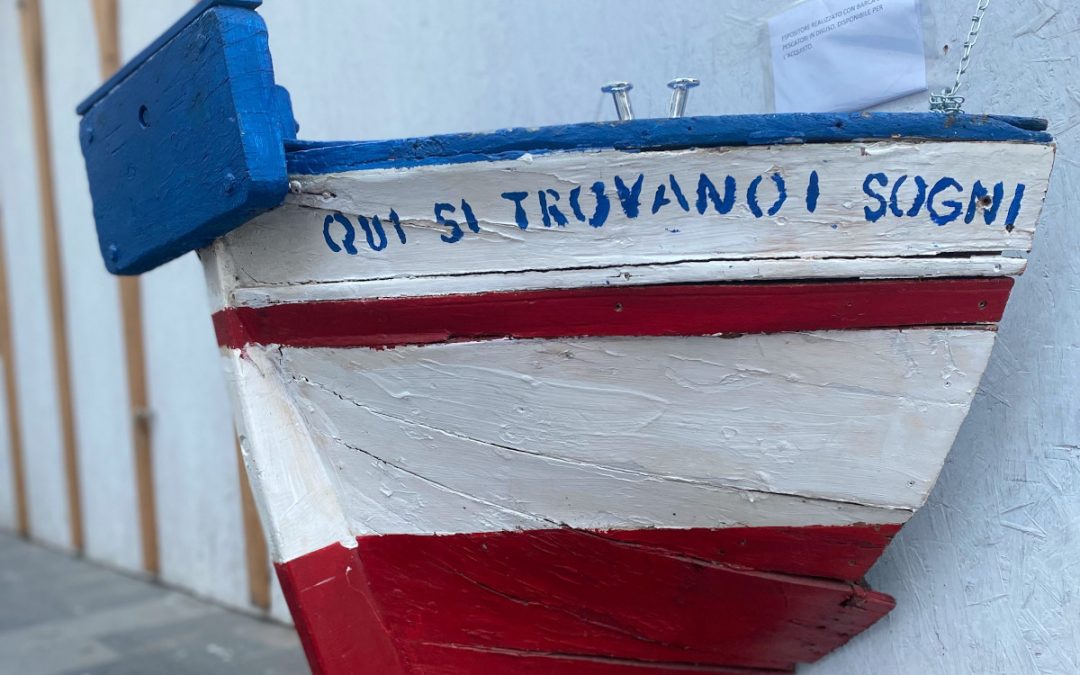
“Difficulty attracts the man of character, for it is by facing it that he fulfills himself” Charles de Gaulle
At the beginning of my career as a manager, I believed that, as the team leader with the most experience in the company, it was my duty to avoid making mistakes and to prevent others from making them as well. Over time, I realized that this attitude is a mistake in itself, because in life we need mistakes to strengthen ourselves, learn valuable lessons, and build resilience.
Of course, ‘to err is human, but to persist in error is diabolical.’ Mistakes do indeed lead us to knowledge, but repeating them without learning from our errors prevent us to grow, reduces the trust others place in us, creates dissatisfaction, and furthermore worsen the situation through continue damages.
I would like to share some reflections that inspired me during moments of failure, ultimately helping me to come up stronger:
Too often, we see failure as a door that closes. What if we consider it an open door?
We can fail because we are human and free – free to make mistakes, correct them, improve and learn from them. After all, we aren’t born with an instruction manual…
Mistakes are inevitable, and the challenge they create offers opportunities to reflect and respond, ultimately allowing us to understand what we want.
Whenever life finds obstacles, it must find within itself resources of creativity to continue growing. Sometimes through a new direction that the obstacles suggest.
Believing that failure can help us rise again and reinvent ourselves means embracing a philosophy of becoming. This idea is beautifully captured in Sartre’s metaphor of the rock in his Being and Nothingness: “That rock, which resists deeply if I try to move it, becomes, on the contrary, a precious help if I use it to climb and contemplate the landscape.” We all have the power “to turn the obstacle represented by the rock into a stepping stone for new projects and prospectives”
To achieve this, we need adventure, the courage to step out of our comfort zone, and trusting more our intuition. And also, dare to make choices that go beyond our rational arguments. It’s indeed when knowledge isn’t enough that we must decide (from the Latin decisio, meaning “to cut”), finding the courage to act within uncertainty.
From my experience, I’ve noticed that in Italy, failing at a young age often means being perceived as unable to find the right path, while in the United States, it’s seen as an early start to seek your own way. The first approach perceives failure as being a loser, in the second failure is seen as opportunities (to get better and better as we fail by trying)
Of course, there are exceptions, but I believe this is a fairly realistic snapshot of two sides of the same coin, regardless of the geographical context.
Audacity
Knowing fear but transform it into a source of motivation. As the saying goes, “Fortune favors the daring”; it favors them because they strive to challenge themselves, by keep testing their talents, trying to minimize risks, and by taking responsibility for what is left. Nietzsche declared that living authentically demands such a sense of risk. Become who you are—no one else will do it for you: have the courage to become yourself, embrace your uniqueness in a society that, by its nature, values rules instead.
But how do you become daring?
By gaining experience with consistency and discipline, continuously improving our own skills, taking that extra step out of your comfort zone, nurturing curiosity, avoiding perfectionism, and admiring the boldness of others.
The Adventures of Huckleberry Finn by Mark Twain teaches us to “stay away from people who discourage your ambitions. Truly great people will make you feel that you can become great too ; and they will show it not necessarily with words but through their natural behavior: their example is worth a thousand words.”
Sport
Port is one of the best training for failure. Coaches know well that pride and the conviction of being invincible are the worst enemies of every champion.
There is nothing more effective than a defeat to refocus an athlete’s attention, restore that subtle doubt without which talent cannot fully express at its best.
Humility
The humility lesson given by failure is the opportunity to measure our limits. Our come back to humility after a failure process which is often painful, frequently marks the beginning of a new creative adventure.
A prominent example is the story of Steve Jobs: in 1985 he faced immense disappointment, when he was forced to resign by the newly appointed president chosen by the shareholders of the company he originally founded. He then stated that this failure became the lesson in humility he needed, allowing him to reconnect with reality and rediscover the value of obligations that sparked back his creativity.
As he himself stated in his famous 2005 Stanford University commencement speech, “Getting fired from Apple was the best thing that could have ever happened to me… It freed me to enter one of the most creative periods of my life.”
Letting Go
“What depends on you is to accept what does not depend on you” Epictetus
Pointless is trying to change what is beyond our control; it is far more effective to channel our energies into acting on what we can influence and change.
I gained a deep understanding of these words when I found the courage to live a challenging yet sudden difficult moment in my professional career as an opportunity to take a break from an hectic life mostly lived on “autopilot” mode. Rather than dwelling on a sense of injustice, I chose to accept reality and turn it into concrete actions to build something new and more in line with my true self.
The crucial question is not whether a situation is fair or unfair, but whether we can draw inspiration from it to create something meaningful.
Complaining about reality is equivalent to escaping from it, taking refuge in subjective judgments usually leads nowhere unless it is accompanied by constructive criticism or proposals.
Failure may not always be within our control. But how we respond to it most certainly is!
What about you: how many times have you acknowledged your mistakes and found the strength to correct them?
Feeling like to share how you faced a failure? Comment below ↓
If you enjoy the blog, the best way to give feedback is to leave a comment below or following us at @_extramiles_ It helps tremendously, so don’t hesitate!
Sources: inspired by an excerpt from the book The Art of Failure by Charles Pépin.